Why a Professional Assessment Matters Before Tree Felling Begins
Tree felling can sometimes be the most appropriate way to deal with a tree that is severely deteriorated, unsuitable for its position or no longer practical to retain. However, deciding that a tree should be removed is only the beginning. Before any felling takes place, the tree and its immediate surroundings need to be assessed carefully so that the work can be planned around the conditions actually present.
For property owners in Ripley, Derbyshire, a professional assessment provides clarity about the condition of the tree, the complexity of the work and the most suitable method of removal. Trees differ considerably in size, structure and accessibility, which means a method that is appropriate for one tree may be completely unsuitable for another.
Why Should a Tree Be Professionally Assessed Before Felling?
A professional tree assessment considers much more than the height or appearance of a tree.
Its condition, branch structure, trunk, surrounding space and proximity to nearby features can all influence how the work should be approached. The assessment can also establish whether complete removal is genuinely necessary or whether appropriate tree surgery could resolve the original concern while retaining the tree.
Where felling is the appropriate option, understanding these factors beforehand allows the work to be properly planned rather than making important decisions once removal has already started.
The Reason for Felling Should Be Clearly Established
Before removing a tree, it is important to understand exactly why felling is being considered.
A homeowner may be concerned because a tree has become very large, developed dead branches, started leaning or grown beyond the space originally available to it. These are all reasons for professional assessment, but they do not automatically lead to the same recommendation.
In some situations, selective pruning or crown management may provide an appropriate alternative.
In others, the overall condition or position of the tree may mean that removal is the more suitable long-term approach.
Establishing the reason first helps ensure that the work is proportionate to the actual problem.
Tree Size Alone Does Not Determine the Complexity
A large tree will naturally require careful planning, but height is only one consideration.
A smaller tree growing within a confined garden can sometimes present more complicated working conditions than a much larger tree standing within an open area.
The assessment needs to consider:
- Overall tree height and canopy spread
- Trunk dimensions
- Branch arrangement
- Available working space
- Nearby garden features
- Access to the tree
- Ground conditions
- The condition of the tree itself
These factors help determine how the tree can be dismantled or felled in a controlled manner.
The Tree’s Structural Condition Needs to Be Understood
A tree that appears substantial externally may contain areas of deterioration that affect how it should be worked on.
Dead branches, weakened unions, cavities or deterioration within sections of the tree can influence the removal method. Likewise, a declining tree may respond differently during dismantling from one with healthy, flexible growth.
Professional assessment helps identify visible indicators of structural weakness before work begins.
This allows the planned approach to reflect the tree’s actual condition rather than assuming that every branch and section will behave predictably.
Dead Trees Require Particularly Careful Assessment
A dead tree does not necessarily remain structurally unchanged after it stops producing healthy growth.
Branches and other sections can gradually become more brittle as deterioration progresses. This may affect how the tree responds while being worked on.
The extent of deterioration can vary considerably between trees and between different parts of the same tree.
Assessing these characteristics beforehand helps determine an appropriate removal method rather than treating the tree as though it were still in normal healthy condition.
Leaning Trees Need More Than a Visual Judgement
Not every leaning tree is necessarily unstable.
Some trees develop a natural lean over many years while adapting their growth accordingly. In other situations, a change in position may indicate developing movement or structural problems.
Professional assessment considers the lean alongside other visible characteristics.
The direction of growth, canopy distribution, trunk condition and surrounding ground can all provide useful information.
If felling is required, the lean also becomes an important factor when planning how the tree should be dismantled or removed.
Branch Distribution Affects the Removal Plan
Tree crowns are rarely perfectly symmetrical.
One side may contain considerably more growth, or several substantial limbs may extend in particular directions. This distribution affects both the tree’s overall form and how individual sections can be removed.
A professional tree surgeon can examine the canopy before beginning work and determine how the branch structure influences the sequence of removal.
Planning the order carefully is particularly important where surrounding space is restricted.
Nearby Features Need to Be Considered
Trees often grow close to other parts of a garden.
A tree may stand beside fencing, sheds, paths, planted areas or other features that property owners wish to retain. Branches may also extend across sections that need protection during the work.
These surroundings influence the available working area.
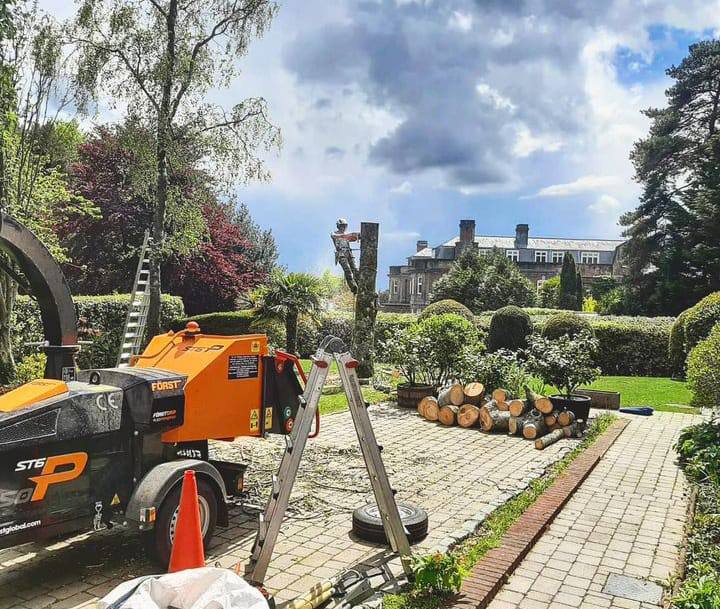
Where sufficient open space exists, a tree may be suitable for removal in larger sections. In a confined location, controlled dismantling may be more appropriate so that individual branches and stem sections can be managed separately.
Professional assessment establishes these constraints before the work begins.
Access Can Influence How Tree Felling Is Carried Out
Access to the tree is another important practical consideration.
Some gardens provide straightforward access, while others require work to be planned through narrower routes. The position of the tree relative to entrances and surrounding features can affect equipment use and how removed material is handled.
This should be considered at the assessment stage.
Understanding the working environment beforehand helps ensure that the removal method is appropriate for the particular property rather than relying on assumptions that may prove impractical once work starts.
Ground Conditions Can Affect the Working Area
The ground surrounding a tree forms part of the working environment and should not be overlooked.
Sloping ground, restricted space or uneven areas can influence how the work is organised. The position of surrounding surfaces and planting may also affect where equipment and removed sections can be managed.
Assessing these conditions beforehand allows the work area to be considered as a complete space.
This is particularly important when the tree needs to be dismantled progressively rather than felled as a complete stem.
Some Trees Need Sectional Dismantling
Tree felling does not always involve cutting a tree at the base and allowing it to fall in one piece.
Where surrounding space is limited, a tree may need to be dismantled in sections. Branches are removed progressively before the remaining stem is reduced in manageable pieces.
The appropriate technique depends on the tree and its surroundings.
Professional assessment helps determine whether sufficient space exists for a more straightforward approach or whether sectional dismantling provides the more suitable method.
The Order of Work Matters
Where a tree requires dismantling, the sequence of work needs careful consideration.
Removing branches changes the structure and weight distribution of the remaining tree. Each stage therefore influences the next.
A planned sequence allows the tree surgeon to work systematically through the canopy and stem rather than making decisions reactively.
This preparation is particularly valuable for trees with substantial limbs, uneven crowns or restricted working space.
Professional Assessment Can Identify Whether Felling Is Unnecessary
One of the most valuable reasons for obtaining professional advice is that it may reveal that complete removal is not required.
A tree may have one problematic branch while the remainder remains suitable. Excessive canopy size might potentially be managed through crown reduction, while deadwood can sometimes be removed without affecting healthy sections.
A tree surgeon can distinguish between a localised problem and one affecting the tree more widely.
Where appropriate tree surgery can resolve the concern, retaining the tree may be a more proportionate option than felling it unnecessarily.
Previous Tree Work Can Affect the Assessment
Trees often show evidence of earlier pruning.
Previous reductions, removed limbs and other historical work can influence the way a tree subsequently develops. Some trees produce substantial regrowth following pruning, while others may develop an uneven canopy.
These characteristics should be considered before removal begins.
Understanding the tree’s history can help explain its current structure and identify areas that may require particular attention during dismantling.
The Surrounding Garden Should Be Considered as a Whole
Removing a tree can significantly change the character of a garden.
A mature tree may provide screening, shade or visual structure even when it has become difficult to manage. Its removal can therefore affect the surrounding space as well as eliminating the original problem.
Professional advice provides an opportunity to consider whether felling is genuinely the preferred outcome.
Where removal remains appropriate, the working plan can also consider how surrounding garden features will be managed while the tree is dismantled.
The Stump Should Be Considered Before Work Begins
Tree removal does not automatically mean that the stump disappears.
Once the trunk has been removed, the remaining stump may influence how the area can subsequently be used. If the homeowner intends to alter the garden, replant the area or create a more open space, stump management may need consideration.
Discussing this before felling helps create a more complete plan.
Where appropriate, stump grinding can be considered separately from the removal of the tree itself.
Professional Planning Helps Avoid Unnecessary Damage
Tree felling involves handling substantial amounts of woody material, sometimes within relatively confined surroundings.
Planning how branches and trunk sections will be removed can help protect areas of the garden that are intended to remain.
The position of fences, paths, planting and other features can be considered when deciding how individual sections should be managed.
This attention to the complete working environment is an important difference between planned professional tree removal and simply approaching the tree as an isolated object.
Every Tree Requires an Individual Approach
There is no single felling method suitable for every tree.
A small tree within an open area creates very different working conditions from a mature specimen with an extensive canopy in a restricted garden. Similarly, a healthy tree being removed for practical reasons may require a different approach from one affected by significant deterioration.
Professional assessment allows the method to be tailored to the individual tree.
This helps ensure that the work carried out reflects its structure, condition and surroundings rather than applying the same approach regardless of circumstances.
Why Professional Tree Felling Matters
Professional tree felling combines assessment, planning and controlled execution.
Before work begins, an experienced tree surgeon can consider:
- Why removal is being proposed
- Whether another form of tree surgery may be suitable
- The size and structure of the tree
- The condition of the trunk and branches
- Canopy distribution
- Available working space
- Nearby garden features
- Access and ground conditions
- Whether sectional dismantling is required
- How the remaining stump will be managed
Considering these factors beforehand creates a clear plan for the work rather than leaving important decisions until removal is underway.
Professional Tree Felling in Ripley, Derbyshire
At Ripley Tree Surgeons, we assess trees carefully before recommending or beginning removal.
The objective is to understand the condition of the tree, why felling is being considered and how its surroundings influence the work required. Where another form of tree surgery can appropriately address the concern, this can be considered before complete removal is recommended.
For property owners in Ripley, Derbyshire, professional assessment provides a clear basis for deciding how a tree should be managed and, where felling is appropriate, how the work should be approached.
Conclusion
A professional assessment matters before tree felling because every tree presents a different combination of structure, condition, size and surroundings. The safest and most appropriate removal method can only be planned once these factors have been properly understood.
Assessment also prevents felling from becoming the automatic response to every tree problem. In some circumstances, targeted pruning or crown management may provide a suitable alternative, while in others complete removal will remain the appropriate solution.
If you are considering tree felling at your property in Ripley, Derbyshire, contact Ripley Tree Surgeons. We can assess the tree and its surroundings, determine the most appropriate approach and carry out the required tree surgery with careful planning from the outset.
Call us on: 01773 300 799
Click here to find out more about Ripley Tree Surgeons
Click here to complete our contact form and see how we can help with your trees needs.